

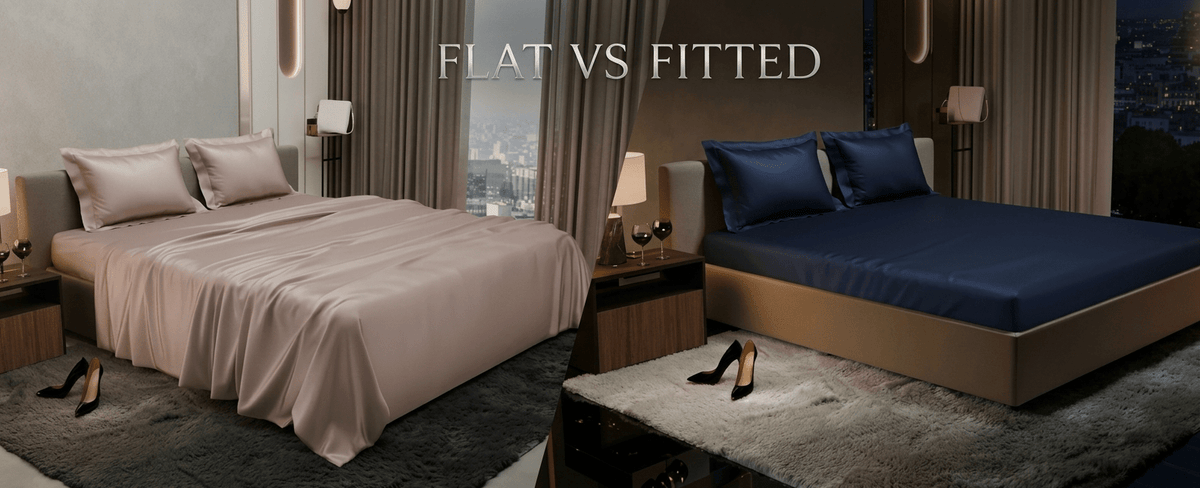
A bedsheet should make the bed easier to use, not add another task to your morning. Fitted sheets grip the mattress. Flat sheets need tucking, but they can be used in more than one way. The right choice depends on your mattress, sleeping habits and how you make the bed.
What Is a Fitted Sheet?
A fitted sheet sits closely around the mattress. Elastic is stitched along the corners or edges, so the fabric holds its position when you turn at night.
Getting the size right matters. Besides length and width, check the mattress depth. A shallow pocket may slip off a thick mattress, while an oversized sheet can gather.
What Is a Flat Sheet?
A flat sheet is a large rectangular piece of fabric with no elastic or shaped corners. You can spread it over the mattress and tuck it under the sides, or place it above another sheet as a light layer.
Its plain shape makes it flexible. It folds easily, works for layering and can serve as a light cover on warm nights.
Fitted Sheet vs Flat Sheet Comparison
The fitted sheet vs flat sheet choice becomes clearer when you compare how both behave on the bed.
| Point | Fitted Sheet | Flat Sheet |
|---|---|---|
| Fit | Wraps around the mattress | Needs tucking |
| Hold | Usually stays secure | May shift |
| Folding | Takes practice | Folds easily |
| Use | Mainly covers the mattress | Can cover or layer |
| Sizing | Depth matters | Extra fabric helps |
One saves time while making the bed. The other gives you more freedom in how it is used.
Advantages of Fitted Sheets
The biggest advantage is simple: once fitted properly, the sheet usually stays there.
This style works well when you:
- Move often while sleeping
- Prefer a smooth surface
- Make the bed quickly
- Use a thick mattress
- Dislike retucking loose corners
It also gives the bed a clean finish because less fabric hangs around the sides.
Advantages of Flat Sheets
Flat sheets are easier to fold, iron and store. They also suit different mattress depths, provided there is enough fabric to tuck underneath.
A flat sheet can cover the mattress, sit between the sleeper and duvet, or act as a light summer layer. It can also reduce direct contact with heavier bedding and help keep blankets cleaner.
Which Sheet Is Easier to Maintain?
Washing is similar when both sheets use the same fabric. The main difference appears before and after the wash.
A flat sheet spreads easily on a clothesline and folds without a struggle. A fitted sheet may curl around other laundry because of its elastic edges. On the bed, however, it needs less daily adjustment.
Follow the care label and dry either style fully before storing.
Fitted Sheet vs Flat Sheet for Indian Homes
The fitted vs flat sheet decision often comes down to routine. In busy homes, a fitted sheet can make morning bed-making quicker. It also helps when children use the bed during the day or when sleepers move often.
Flat sheets remain practical for Indian weather. They dry easily, fold compactly and work as a light cover in warmer months. They also suit households that like neatly tucked corners.
Before buying a fitted sheet, measure the mattress depth, especially when a topper is used.
Best Uses for Fitted Sheets
A fitted sheet is a sensible choice for the main sleeping surface. It works especially well on mattresses that are difficult to lift repeatedly.
You may prefer one for:
- Children’s rooms
- Deep mattresses
- Large beds
- Active sleepers
- Quick weekday bed making
It can also sit below a flat sheet when you want a layered arrangement.
Best Uses for Flat Sheets
A flat sheet earns its place through flexibility. It can cover the mattress, sit above a fitted sheet or replace a light blanket during warm weather.
Hotels often use flat sheets because they are easier to launder, fold and adapt across beds. At home, the same qualities make them useful for guest rooms and spare bedding.
How to Choose the Right Bedsheet Style
Start with the mattress. Measure its length, width and depth instead of relying only on labels such as double, queen or king.
Then consider your routine:
- Choose fitted for a secure grip and faster bed-making.
- Choose flat for easy folding and flexible layering.
- Use both for a neat, layered bed.
- Pick breathable fabric for warm rooms.
- Check washing instructions before buying.
The difference between a flat sheet and fitted sheet is mainly about use and convenience. Stoa Paris bedsheets can be selected according to the fit, surface feel and bedroom style you enjoy. The right sheet should fit properly and make daily care simpler through everyday use at home.
FAQs
1. What is the difference between a fitted sheet and a flat sheet?
A fitted sheet has elastic edges that grip the mattress. A flat sheet has plain edges and needs tucking.
2. Which sheet is easier to use?
Fitted sheets are quicker to secure. Flat sheets are easier to fold and store.
3. Do hotels use fitted or flat sheets?
Many hotels use flat sheets because they are flexible and easy to launder.
4. Can a flat sheet replace a fitted sheet?
Yes, when tucked firmly, though it may loosen more easily during sleep.
5. Are fitted sheets better for deep mattresses?
Yes, when the pocket depth matches the mattress. Check the measurements first.
6. Which sheet is easier to wash?
Both wash easily. Flat sheets are usually simpler to dry, fold and iron.
7. Are fitted sheets more expensive?
Sometimes. Fabric, size, finish and construction all influence the price.
8. Why do fitted sheets have elastic corners?
The elastic holds the fabric around the mattress and keeps the surface smoother.
9. Which sheet is better for everyday use?
Fitted sheets suit convenience. Flat sheets suit people who prefer flexible use.
10. Do I need both fitted and flat sheets?
No, either works alone, though using both creates a layered bed.
Share:
Cotton vs Satin: Which Bedsheet Fabric Should You Choose?
What Is TC in Bedsheets? Understanding Thread Count before You Buy