

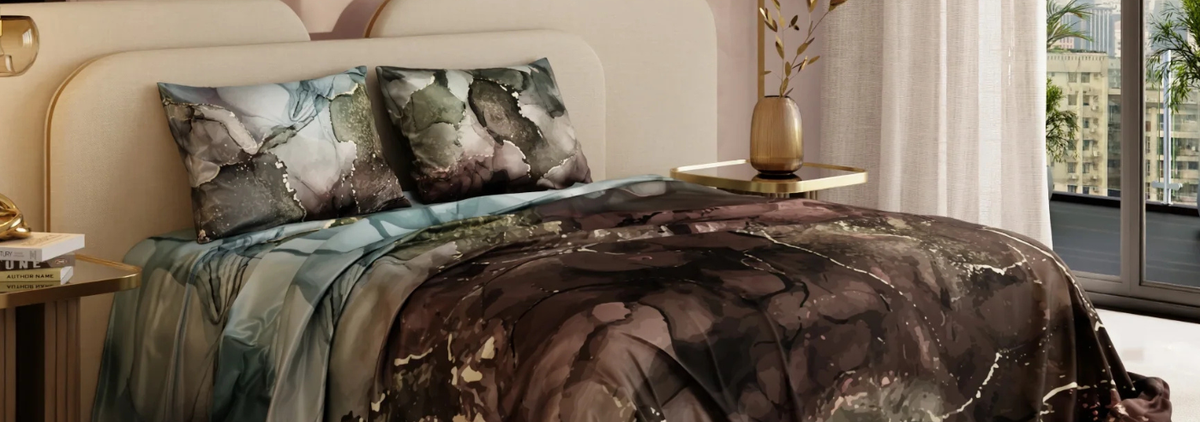
Hot nights can make even a beautifully prepared bed feel uncomfortable. The right sheet can change that experience by allowing heat to escape, handling moisture well and feeling light against the skin. Cooling bedsheets are designed around these qualities rather than simply feeling cold at first touch.
Fabric, weave and fit all influence how comfortable your bed feels through warmer months, making thoughtful bedding choices especially useful for Indian summers and naturally warm sleepers.
What Makes a Bedsheet ‘Cooling’?
A cooling sheet allows air to move around the body instead of trapping warmth close to the skin. Breathable fibres, moisture management and a light construction can all contribute to a fresher sleeping surface. Good cool bedroom sheets should also feel comfortable after several hours of use, not merely cool when you first get into bed.
Best Fabrics for Cooling Bedsheets
Fabric is one of the biggest factors affecting how a sheet feels during warm weather. Natural fibres are often preferred because many of them allow better airflow and absorb moisture without feeling overly heavy.
Some practical options include:
-
Cotton: Soft, breathable and familiar, cotton works well for everyday bedding in warm climates. Lighter cotton constructions usually feel fresher than dense ones.
-
Linen: Known for its airy structure, linen allows heat to move away from the body and becomes softer with regular use.
-
Bamboo-derived fabric: Often valued for its smooth feel and ability to manage moisture, making it comfortable for people who tend to sleep warm.
-
Lightweight blends: Carefully chosen blends can offer easy maintenance while still providing reasonable airflow and softness.
The most suitable fabric ultimately depends on how warm you sleep, the local climate and the texture you prefer against your skin.
Cooling Fitted Sheets Vs Regular Fitted Sheets
A fitted sheet stays directly against the mattress, so its fabric can noticeably affect comfort.
|
Feature |
Cooling Fitted Sheet |
Regular Fitted Sheet |
|
Fabric focus |
Usually chosen for breathability and moisture handling |
May prioritise softness, durability or appearance |
|
Warm-weather comfort |
Designed to reduce heat build-up |
Comfort depends heavily on fabric and weave |
|
Moisture handling |
Often suited to warm sleepers |
Varies according to material |
|
Everyday use |
Useful during warmer seasons or humid weather |
Suitable across seasons depending on fabric |
What to Look for in a Cooling Bedding Set
A good bedding set should feel comfortable as a complete sleep environment rather than relying on one cool-feeling sheet. Pillowcases, fitted sheets and covers can all affect airflow.
When exploring cooling bedding sets, look for:
-
Breathable natural or moisture-managing fibres
-
Lightweight fabric that does not feel dense
-
A weave that encourages airflow
-
Softness without excessive thickness
-
Easy-care materials suitable for frequent washing
-
Bedding layers that work well together
Avoid choosing purely by appearance. A visually luxurious fabric may still feel warm if it has a heavy construction or limited airflow.
Cotton Vs Linen Vs Bamboo: Which Cools Best?
Each material offers a different balance of softness, airflow and texture.
|
Fabric |
Cooling Feel |
Texture |
Moisture Comfort |
Suitable For |
|
Cotton |
Fresh and breathable |
Soft and familiar |
Absorbs moisture well |
Everyday summer bedding |
|
Linen |
Airy and relaxed |
Slightly textured |
Handles warmth well |
Hot climates and warm sleepers |
|
Bamboo-derived fabric |
Smooth and light |
Silky-soft |
Often effective at managing moisture |
Sleepers who prefer a softer surface |
Is Satin a Cooling Fabric? Common Myths Explained
Satin is often associated with a cool, smooth touch, but satin describes a weave rather than one particular fibre. Its actual temperature performance depends on what the fabric is made from.
Keep these points in mind:
-
Satin can feel cool when first touched because of its smooth surface.
-
A satin weave does not automatically make bedding breathable.
-
Satin made from less breathable fibres may retain more warmth.
-
Natural-fibre satin can feel different from synthetic versions.
-
Surface smoothness should not be confused with long-lasting cooling.
For warm-weather bedding, fibre content matters just as much as the finish.
Best Bedsheets for Summer & Hot Sleepers
The most comfortable bedsheets for summer usually feel light, breathable and pleasant against bare skin. Cotton, linen and certain bamboo-derived fabrics are commonly chosen for warm conditions because they can help reduce the heavy, enclosed feeling caused by dense bedding. Hot sleepers should also pay attention to weave, mattress warmth and the number of layers placed on the bed.
How Weave and Thread Count Affect Breathability
Fabric alone does not determine how cool a sheet feels. The way the yarn is woven can change airflow, weight and surface texture.
Consider the following:
-
Percale weaves tend to feel crisp and airy because of their simpler construction.
-
Sateen weaves usually feel smoother but can feel slightly warmer because of their denser surface.
-
Loose, lightweight constructions often allow more air movement.
-
Very dense fabrics may feel softer or heavier but can reduce breathability.
-
Thread count should not be viewed alone. Fibre quality and weave are equally important.
For hot conditions, breathability is often more useful than simply choosing the highest thread count available.
Other Tips to Keep Your Bedroom Cooler at Night
Sheets work best when the rest of the bedroom also supports comfortable sleep.
Simple changes can include:
-
Use lighter blankets during warm weather.
-
Choose breathable pillowcases and mattress protectors.
-
Keep unnecessary bedding layers off the mattress.
-
Allow fresh air to circulate whenever conditions permit.
-
Use curtains or blinds to reduce daytime heat entering the room.
-
Select lightweight nightwear made from breathable materials.
How to Choose the Best Cooling Bed Sheet Set
Start with the way you naturally sleep. Someone who frequently wakes feeling warm may need greater airflow, while another person may value softness and moisture comfort equally.
Before choosing a set, consider:
-
Your usual sleeping temperature
-
Local heat and humidity
-
Fabric texture preferences
-
Breathability of the weave
-
Ease of washing and regular care
-
Fit around your mattress
-
How the sheets work with your existing bedding
Conclusion
Cooler sleep begins with materials that allow the bed to feel light, breathable and comfortable throughout the night. Cotton, linen and bamboo-derived fabrics each offer useful qualities, while weave, fabric density and surrounding bedding also influence warmth. Instead of choosing sheets purely for softness or appearance, consider how the complete sleep surface handles airflow and moisture. Well-chosen cooling bedsheets can make warm nights feel noticeably more comfortable while still creating an inviting, relaxed bedroom.
Share:
Choosing the Perfect Bedsheet Material: A Guide to Comfort and Quality
Types of Bedsheets: Complete Guide to Fabrics, Weaves & Materials